
EN

No items found.
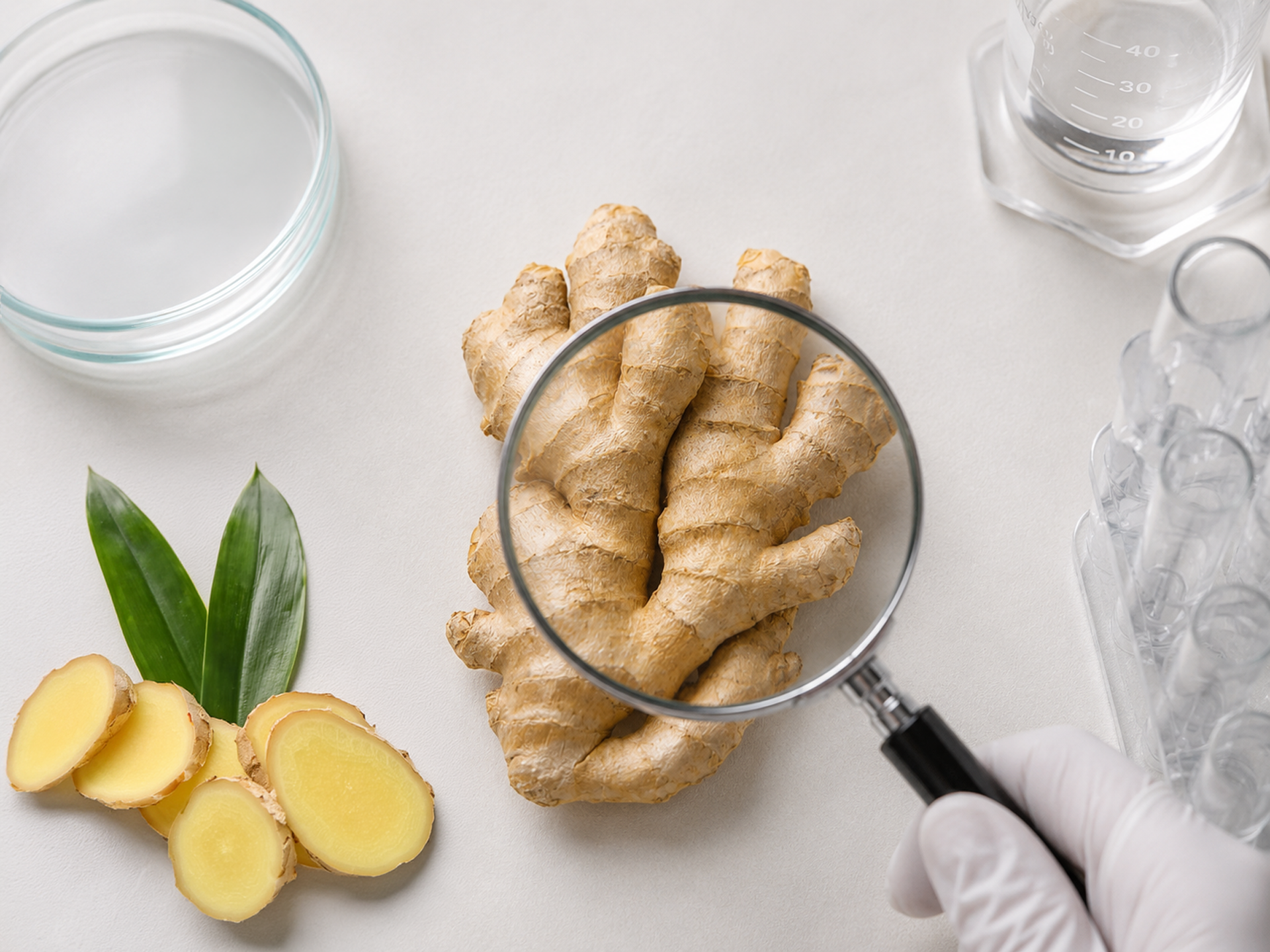
The science behind ginger
Ginger has been used for centuries to support healthy digestion. But what exactly makes this root so special?
The answer lies in two naturally occurring compounds found in ginger: gingerols and shogaols. These are responsible for ginger’s distinctive spicy kick, but they also play an important role in how the stomach and intestines respond to nausea and digestive discomfort.
- They help soothe the stomach
There’s a reason why ginger is often recommended for nausea or after a heavy meal. Gingerols and shogaols help calm feelings of digestive discomfort and support the stomach in restoring its natural balance. - They support smooth digestion
Ginger gives the digestive process a natural boost. Its active compounds help speed up the movement of food from the stomach into the intestines. This can be especially beneficial when you're feeling overly full, heavy or bloated after a meal. - They help reduce bloating
Gingerols and shogaols are also known for their antioxidant properties. By supporting healthy digestive function, they may help reduce gas formation and ease that uncomfortable bloated feeling. - They help soothe mild irritation
Finally, gingerols and shogaols are recognized for their mild anti-inflammatory properties. They can help soothe minor irritation of the stomach lining, providing relief when dealing with occasional digestive discomfort or a sensitive stomach.
Gingerols and shogaols are at the heart of ginger’s digestive benefits. Together, they support digestive comfort in several ways, which helps explain why ginger has been valued around the world for centuries. And while its signature spicy kick may surprise your taste buds, the benefits that come with it are well worth it.